The topic 10 Important Azure Security Settings That Are Easy to Miss is currently the subject of lively discussion — readers and analysts are keeping a close eye on developments.
This is taking place in a dynamic environment: companies’ decisions and competitors’ reactions can quickly change the picture.
When learning Azure security, I realized that many important security controls are already available in the platform but are easy to overlook during deployment and configuration.
To better understand Azure security, I reviewed several identity, networking, secrets management, monitoring, and security posture settings within my lab environment. Throughout this process, I identified a number of commonly overlooked configurations that could increase security risk if left unchecked.
In this article, I share 10 important Azure security settings that I explored, why they matter, how I verified them, and recommendations for improving overall security posture.
Mistake
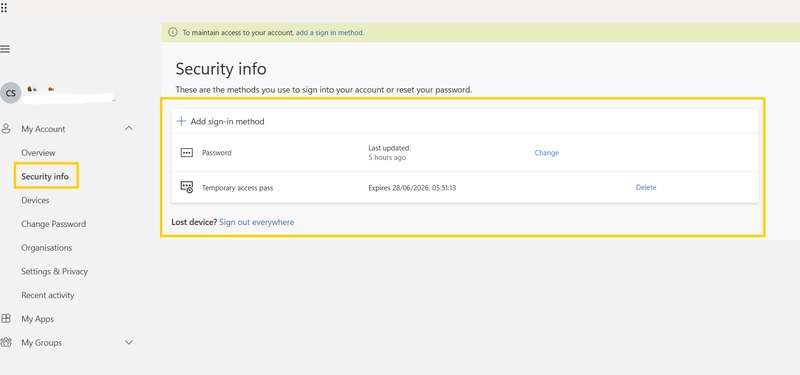
One of the first things I checked was whether multi-factor authentication was enforced for user accounts. It is easy to assume that strong passwords alone provide sufficient protection.
Risk
If a user’s password is compromised through phishing, password reuse, or credential theft, an attacker may be able to access Azure resources without additional verification.
Fix
Enable MFA for all users, especially privileged accounts, and regularly review authentication methods.
Mistake
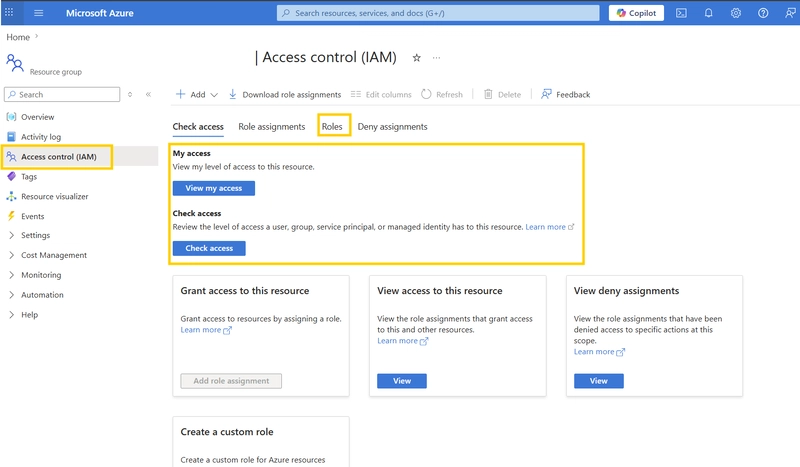
During my lab setup, I initially assigned Owner permissions to simplify testing. While reviewing IAM settings later, I realized how easily excessive privileges can remain in place after deployment.
Risk
Users with excessive privileges can accidentally modify resources, delete services, or grant permissions to others. If an account is compromised, the impact can be significant.
Fix
Apply the Principle of Least Privilege by assigning only the permissions required for a user’s responsibilities.
Mistake
Application credentials and connection strings are sometimes stored directly in configuration files because it is convenient during development.
Risk
Secrets stored in files or repositories may be exposed through source control, backups, or unauthorized access.
Fix
Store passwords, API keys, and connection strings in Azure Key Vault.
Mistake
When I first created a Key Vault, I focused on storing secrets and almost overlooked the networking configuration.
Risk
If credentials are compromised, attackers may attempt access from any location.
Fix
Restrict Key Vault access using selected networks or private endpoints.
Risk
Accidental deletion or unauthorized removal of critical resources could result in service disruption and data loss.
Mistake
Storage accounts may allow access from any network unless networking restrictions are configured.
Risk
Exposed storage services increase the attack surface and may allow unauthorized access attempts.
Fix
Restrict access to selected networks or use Private Endpoints where possible.
Mistake
When creating a virtual machine, allowing SSH access from any source is often the easiest option.
Risk
Internet-facing SSH services are continuously targeted by automated scans and brute-force attacks.
How I Verified
I reviewed Virtual Machine → Networking and checked inbound rules for Port 22.
Fix
Restrict SSH access to trusted IP addresses or use Azure Bastion.
Mistake
Placing all resources in a single subnet may seem simpler during deployment.
Risk
If one resource is compromised, attackers may move laterally to other systems more easily.
How I Verified
I reviewed Virtual Network subnet structures and associated Network Security Groups.
Fix
Separate workloads into dedicated subnets and apply security controls between them.
Mistake
Resources can function normally even when diagnostic logging is not configured.
Risk
Troubleshooting and security investigations become much harder without historical logs.
How I Verified
I reviewed Diagnostic Settings for Azure resources and checked whether logs were being sent to a monitoring destination.
Fix
Configure diagnostic settings and send logs to Log Analytics, Storage Accounts, or Event Hub.
Mistake
Security recommendations are easy to ignore after resources are deployed.
Risk
Unresolved security recommendations can increase exposure to known security risks and reduce overall security posture.
How I Verified
I reviewed Microsoft Defender for Cloud recommendations and Secure Score to understand the current security posture.
Fix
Review recommendations regularly and prioritize high-impact findings.
One of the biggest lessons I learned while reviewing Azure security settings is that many security risks originate from small configuration decisions rather than sophisticated attacks.
Identity management, permissions, networking, secrets management, monitoring, and security posture all play an important role in protecting cloud environments. Regularly reviewing these settings can help identify gaps early and improve overall security posture.
Security is not a one-time task. It is an ongoing process of verification, monitoring, and continuous improvement.
Templates let you quickly answer FAQs or store snippets for re-use.
Are you sure you want to hide this comment? It will become hidden in your post, but will still be visible via the comment’s permalink.
For further actions, you may consider blocking this person and/or reporting abuse
Thank you to our Diamond Sponsors for supporting the DEV Community
Google AI is the official AI Model and Platform Partner of DEV
DEV Community — A space to discuss and keep up software development and manage your software career
Built on Forem — the open source software that powers DEV and other inclusive communities.
We’re a place where coders share, stay up-to-date and grow their careers.