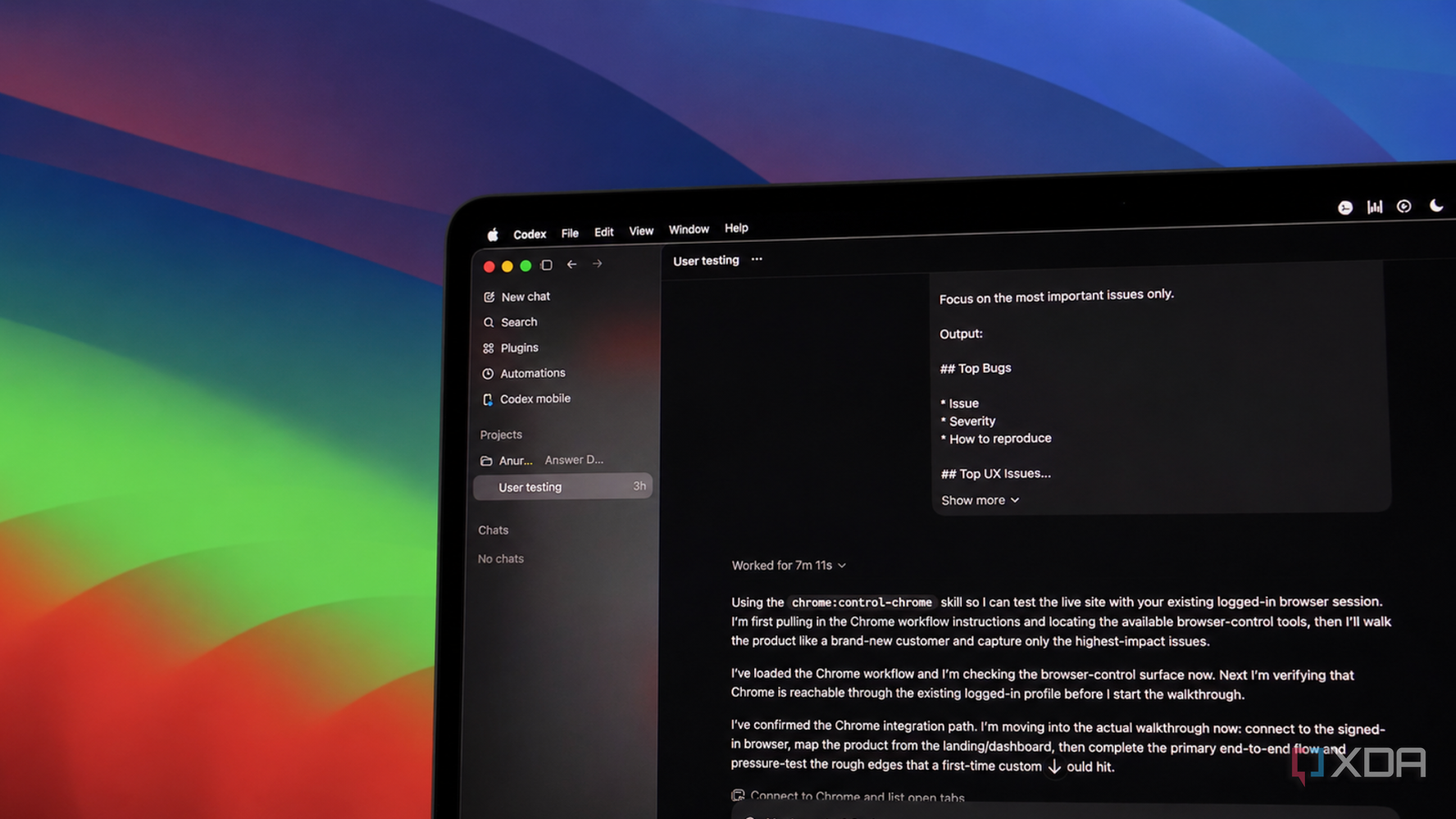
The topic Codex’s latest update fixes the one thing I hate most about AI usage limits is currently the subject of lively discussion — readers and analysts are keeping a close eye on developments.
This is taking place in a dynamic environment: companies’ decisions and competitors’ reactions can quickly change the picture.
There’s almost nothing every person agrees on. My favorite color might be the exact shade you’d never paint a single wall in your house. I can drink matcha three cups deep before noon and genuinely enjoy it, while my sister insists it tastes like someone wrung out a lawn. Preferences are personal, and they rarely line up. Ask ten people about their favorite food or whether pineapple belongs on pizza, and you’ll get ten answers and at least two arguments. But there’s exactly one thing I’ve found that every single AI user agrees on: nobody likes usage limits.
You can love a tool, defend it constantly, build half your workflow around it, and still want to cancel your subscription and switch to a competitor when you get a politely-worded message telling you to come back later. The only people who’ll disagree with me here are the companies building these tools. Unfortunately, the policies surrounding these limits are only getting worse. Limits get quietly lowered, unlimited plans no longer feel unlimited, and more and more features keep getting walled off. This is exactly why OpenAI’s latest Codex change is such a strange thing to see.
Given how much I write about AI and consumer tech, I consider myself fairly good at reading between the lines and understanding what companies are launching through their posts and announcement blogs alone. Despite that, this was one of the first announcements that made me read it a few times before I understood what was actually being offered. With most AI tools, including Codex, your usage runs on a rolling window. There’s a short-term quota that refills a set number of hours after you start drawing it down, usually with a weekly cap sitting on top.
Codex runs on a five-hour window for the short-term limit, so if you start a heavy session at 9 AM, that quota refills around 2 PM – five hours later. If you hit the limit anytime in between, you’re stuck waiting it out, regardless of how urgently you need it back. The window refills when the clock says so, not when you do. Historically, that was the end of the story. You either rationed what was left to make it to 2 PM, or you closed the laptop and waited for the limit to reset. OpenAI’s newest update changes that.
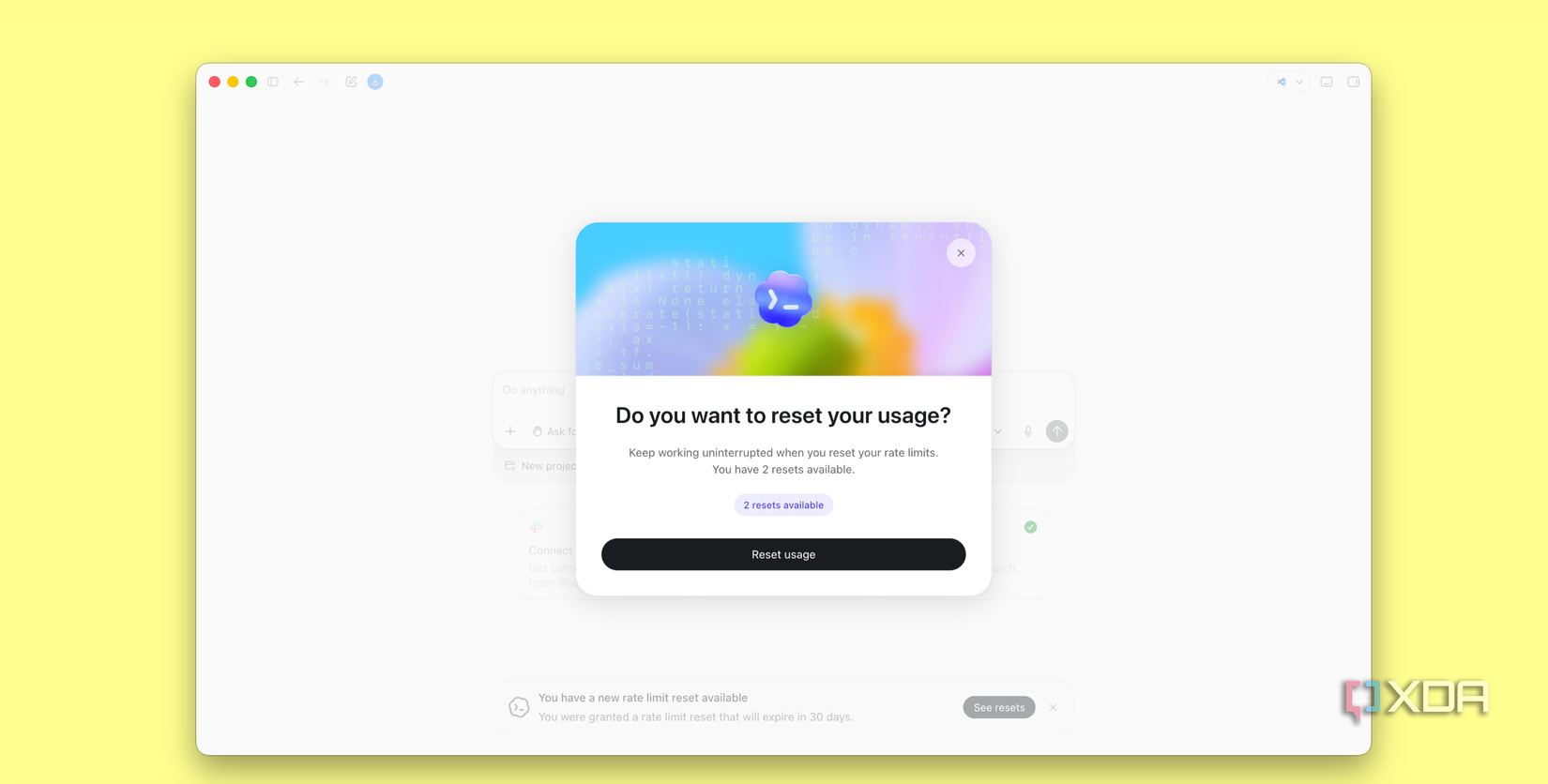
Starting June 12th, Codex users on Go, Plus, Pro and Business plans get a reset they can use whenever they want. Using the same example as above, say you begin using Codex at 9 AM, and hit the limit one hour into your session at 10 AM. Instead of needing to wait until 2 PM, you can use your reset and keep working.
Your usage goes back to 0, and you pick up right where you left off. Every eligible user on Go, Plus, Pro, and Business starts with one of these for free, and Plus and Pro users can stack up to three more through a temporary referral program. Until June 24th, Plus and Pro users can invite up to three friends. Once the invited friend sends their first Codex message, both the inviter and the invited get a banked reset added to their account.
Just to be very clear, this update doesn’t give you extra usage in any way. You’re not getting a bigger quota, a higher cap, or more messages than you had last week. The reset doesn’t add anything on top of your limit. Instead, it just lets you refresh the limit you already have, on your own timing instead of the clock’s.
This change does come with some catches, too. The first is expiry. The free reset isn’t yours to keep indefinitely, and expires 30 days after it lands in your account. This applies to the resets you get from referrals as well. Every banked reset, regardless of how you earned it, carries the same 30-day shelf life from the day it’s granted. The second is how exactly you get more resets. After the limited-time pilot running until June 24th runs out, OpenAI hasn’t said how you’ll be able to earn resets at all. That said, on June 18th, OpenAI’s Thibault Sottiaux dropped a one-off “double reset” on everyone. He reset everyone’s limits immediately, and dropped a second reset straight into their bank to save for later.
So there’s clearly room for OpenAI to hand these out whenever it wants, outside the referral system. The open question is whether that stays an occasional goodwill gesture or turns into something you’re eventually expected to pay for.
Now, this isn’t a groundbreaking update in any way. It won’t change how you use Codex day to day, you don’t get more usage, and it isn’t a fix for the limits themselves. That said, it does address one of the biggest frustrations that come with these limits: the powerlessness. You hit a wall at the worst possible moment and could do nothing but wait for a clock you didn’t set.
This update simply hands back a little control over when you hit the limit, and for anyone who’s lost a good stretch of work to a reset that landed a few hours too late, that’s not nothing. Given that most usage-limit news has gone the other way recently, a small change that gives user back even a bit of control feels refreshing!